"People who are really serious about software should make their own hardware", Alan Kay.
Problem: the vast majority of the energy we use is completely 'unmanaged', in the sense that we have no idea where, when and how it's used.
Sure, you know at a high level - because you pay for it - but you can't answer questions with energy bills, like what amount of energy did it take to complete a step in a manufacturing process? What's the benefit of upgrading this compressor? Why is building A more expensive to run than building B?
In my view, there are four reasons for it:
(a) the systems & products that collect high-quality energy data are difficult as hell to work with
(b) it's expensive (and not just the hardware... the installation / maintenance / software / services)
(c) the path from "data to energy efficiency" isn't clear (i.e. you can't just 'buy' energy savings, it takes a management process and experienced people to interpret data and take action)
(d) for lots of industries, energy is not a significant enough % of overheads to go after
For mass-market adoption, the systems for energy management and demand response need to get 10x cheaper and easier to use.
What does a 10x improvement look like? An example from the consumer world is a home alarm system. 10 years ago, you could spend €2,000 on a monitored home alarm system that took an experienced person a full working day or more to install. Today, you can get equivalent (or better) functionality for €200 and install it yourself in 1 hour.
Have systems for energy management and demand response improved like that in the last 10 years? No.
Does that present an opportunity? Yes. Do higher energy prices and grid instability increase the need further? Yes.
What's the plan?
(a) design a product range for energy management and DR that meets or exceeds the standards set by traditional systems (commercial / industrial customers will never accept lower standards of security, accuracy, ruggedness, reliability and scalability)
(b) improve user experience at every level in the stack. reduce the need for services with products that configure, troubleshoot and maintain themselves
(c) vertically integrate hardware and software to remove chunks of 3rd party margin and drive down cost
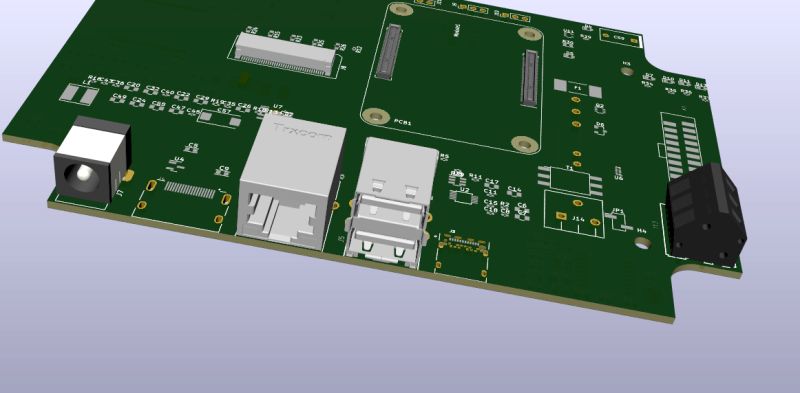
So, here's the next piece of the puzzle: we're building our own IoT Gateway based on the Raspberry Pi Compute Module 4. It's going to have lots of comms interfaces (Ethernet, Wi-Fi, Bluetooth, 4G/5G/LPWAN cellular, ZigBee and LoRa) a fast processor and plenty of resources.
It will run Canonical's highly-secure Ubuntu Core operating system with an app store that you can install 3rd party software from - so you can turn it into a building management system, add machine learning / AI software, communicate with PCLs / SCADA, and pretty much anything else you can think of with a single command.
It will be a general-purpose 'brain' for any building, built on open standards.
Available in Q4 2021.